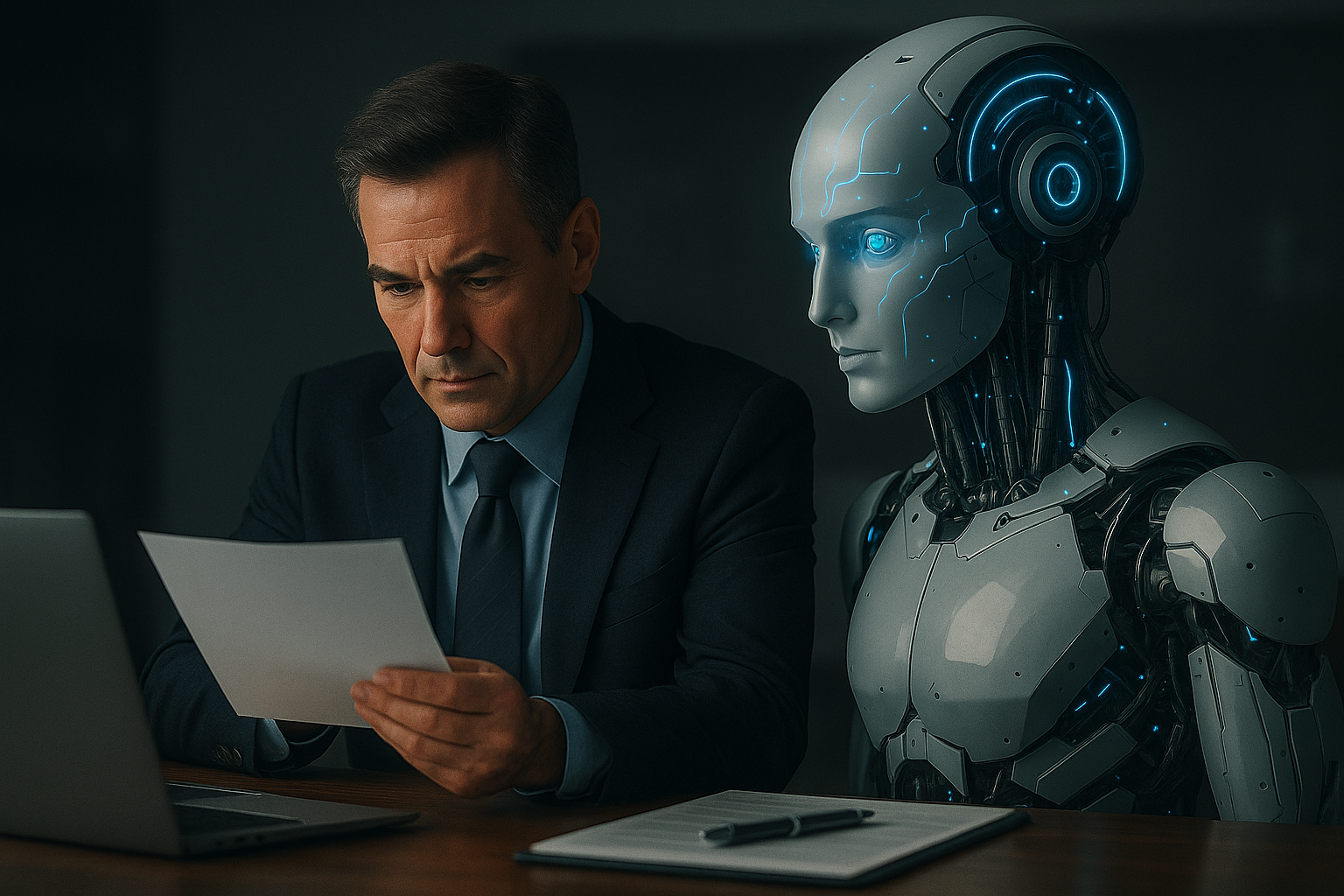
Dear CHRO: AI Just Changed Your Job Description

At the 2025 MIT Sloan CIO Symposium, the agenda was clear: AI is here, it’s accelerating, and CIOs are being asked to lead the charge. But as I listened to session after session, a different question began to emerge for me: Where is HR in all of this? Because while CIOs may be in the spotlight, CHROs are about to be thrust into a whole new role, ready or not.

AI is not just being used to automate workflows. The decisions on how it is used and integrated can redefine how organizations function. That includes how companies design roles, develop people, create products, serve customers, shape culture, and manage accountability. The shift is so fundamental CHROs won’t be able to succeed without changing their job descriptions and responsibilities. Some companies are already fusing functions. For example, Moderna, the pharmaceutical company, has recently combined the CIO and CHRO roles into one. That’s not just an org chart curiosity—it may be a signal of what’s ahead.

After spending two days discussing this topic with numerous CIOs, AI experts, and researchers, here are some takeaways on what CHROs must do to stay relevant in the era of AI:

1. Org Design Must Be Future-Back, Not Present-Forward

Most org design today still starts with current-state mapping and incrementally adjusts roles or teams. Vipin Gupta, Former CIO at Toyota Financial Services, challenged us to reverse-engineer organizations from an unconstrained future—not tweak what exists today.

If AI is going to reshape workflows, decision-making, and hierarchies, HR needs to understand how to build structures that support AI-human collaboration, agile teaming, and new decision-making models.

2. From Jobs to Skills

Many organizations are pivoting to skill-based talent models. But skills don’t exist in a vacuum. Organizations need more visibility into the skills available in their talent pool, pivot quickly to identify what’s needed, and design new strategies to meet those needs.

HR must create real infrastructure: digital skills wallets, internal talent marketplaces, learning systems that actually upskill—not just check boxes.

With AI replacing or reducing many entry-level roles, the methods many organizations have traditionally used for development pathways will be disrupted.  With fewer junior people, the internal talent and succession pools will shrink.  Also, we’ll need to consider: How will people gain experience if the traditional career ladder disappears?

3. Prepare for Role Disruption—and the Human Fallout

We’re already seeing large-scale job shifts due to AI. Microsoft recently laid off thousands of workers citing AI efficiencies among other reasons. Ikea retrained over 8,000 call center employees whose roles were replaced in part by an AI chatbot named Billie. Whether it’s layoffs, reskilling, or role redesign, this is HR’s domain.

CHROs must be ready to brace for job changes—and job losses—and to help organizations address what happens next. Are we ready to redeploy, reskill, or respectfully transition those affected? Do we even know what’s coming?

4. Designing for Human-Agent Collaboration

AI agents are already joining the workforce—drafting, summarizing, researching, creating, advising. They’ll be embedded in workflows, teams, and even “collaborating” on projects. HR needs to get ahead of this. What rules should govern these agents? Will they reflect company values? Who is accountable when things go wrong?

Organizations have spent years building cultures rooted in human behavior and unwritten social norms. Now they will need to figure out how (and if) those norms apply when your teammate is digital.

5. Redefine Culture, Leadership, and Accountability

Throughout the symposium, “culture” and “mindsets” came up often—but few defined them clearly. Culture was seen as sentiment. Resistance. Maybe even a barrier.

In the AI era, work culture needs a new definition: it’s not about how people feel, but how people and systems behave—together. And accountability? It’s no longer just about meeting your commitments and hitting a deadline—it’s about acting in alignment with purpose, guardrails, and ethics, whether you’re human or machine.

The CHRO role isn’t disappearing but it is transforming. The function must move beyond employee relations, total rewards, and talent management and step boldly into organization design, AI strategy, work culture, workforce transformation, and ethics. 

Some at the symposium talked about renaming People or HR departments as the “Augmented Resources Department.”  If HR’s main role is to serve as the central point for all things related to the company’s workforce, it needs to think beyond human employees.  The new name may not stick, but the thinking behind it should.

The questions CHROs ask and what they do now will shape the kind of organizations and societies we build.  Before diving into another week of headcount meetings and policy updates, ask yourself: When was the last time you sat with your CIO or CTO to understand where AI is being deployed across the business?  Do you know which roles are at risk and where AI could enhance performance?  Is your learning strategy built for constant reinvention? Is your team guiding leaders through the ethical and people questions that come with AI adoption? These aren’t extras. They’re now the job.

Share this:

Transformación Digital y Adopción de IA

No se trata solo de adoptar tecnología — se trata de que las personas la adopten.

La mayoría de las transformaciones digitales fracasan. Las empresas invierten millones en nuevas herramientas y procesos, pero la adopción se estanca. ¿La razón? Se enfocan en la tecnología y la estrategia, mientras ignoran cómo piensan, sienten y colaboran las personas.

Nosotros comenzamos por el lado humano. Los líderes y equipos enfrentan los miedos, hábitos y dinámicas culturales que impiden la adopción. Construyen nuevas mentalidades, comportamientos y prácticas que hacen que el cambio perdure.

El resultado: Las personas adoptan nuevas herramientas. Nuevos procesos. Nuevos sistemas. Y el impacto empresarial llega de forma natural.

Una clase magistral para líderes que guían la transformación digital y de IA.

Se centra en el cambio de mentalidad necesario para liderar el cambio.

Al combinar el potencial humano con la innovación, ayuda a los líderes a construir culturas adaptativas y preparadas para el futuro.

Los gerentes y líderes de equipo deben replantear su rol en la era de la IA. Ya no se trata de controlar tareas — se trata de facilitar resultados, moldear mentalidades y crear las condiciones para que los equipos y la tecnología prosperen juntos.

Esta clase magistral ayuda a los líderes a:

  • Cambiar su mentalidad de “dueño de tareas” a “facilitador de resultados”.
  • Guiar a los equipos en la adopción de IA mediante la creación de nuevas normas y hábitos.
  • Equilibrar el uso ético de la IA con una delegación inteligente del trabajo.

El potencial de la IA no puede realizarse sin un liderazgo capaz de hacerlo realidad. Este programa está diseñado para líderes de nivel C que necesitan:

  • Desarrollar una mentalidad digital que conecte la estrategia de IA con los resultados del negocio.
  • Comprender que la cultura de trabajo y el liderazgo —no solo las herramientas— son lo que hace que la transformación perdure.
  • Liderar con claridad, equilibrando la velocidad de adopción con la ética y el valor a largo plazo.

¿Qué incluye?

– Autoevaluación: Ofrece una línea base sobre tu estilo de liderazgo y potencial de crecimiento.

– Día 1: Convertirse en un Líder Digital Consciente

– Día 2: Transformar la Cultura y la Estrategia a través de la IA

La mayoría de los empleados de primera línea deben trabajar con IA antes de sentirse realmente seguros. Este programa cierra esa brecha al dotar a los equipos de conocimientos fundamentales y habilidades prácticas para utilizar la IA en sus funciones diarias, manteniéndose siempre alineados con los valores y la toma de decisiones consciente.

¿Qué incluye?

Módulo 1: Comprender la IA en tu entorno laboral

Módulo 2: Adoptar el Liderazgo Digital Consciente

Módulo 3: Primeros pasos con herramientas de IA

Módulo 4: Integrar la IA en la práctica diaria

Formato: Módulos autoguiados + 2 sesiones virtuales facilitadas (1.5 h cada una)

Cuando las organizaciones adoptan la IA, la cultura de trabajo es el factor decisivo. Este programa ofrece a los líderes un cambio de perspectiva fundamental: prepara tu cultura de trabajo para la IA, y la adopción llegará como consecuencia.

¿Qué incluye?

– Autoevaluación: Proporciona una línea base sobre tu estilo de liderazgo y potencial de crecimiento.

– Sesiones en vivo: 7 sesiones (3 horas cada una)

– Autoguiado: 3 módulos (2 horas cada uno, opcional)

– Extras: networking, intercambio entre pares y ejercicios prácticos

Diseñado en colaboración con Duke Corporate Education para combinar rigor académico con conocimientos aplicables.

Más información.

Digital Transformation & AI Adoption

It’s not just about tech adoption – it’s about human adoption of tech

Most digital transformations fail. Companies pour millions into new tools and processes, but adoption stalls. The reason: they focus on technology and strategy while ignoring how people think, feel, and collaborate.

We start with the human side. Leaders and teams confront the fears, habits, and cultural dynamics that prevent adoption. They build new mindsets, behaviors, and practices that make change stick.

The result: People embrace new tools. New processes. New systems. And the business impact follows naturally.

A masterclass for leaders guiding digital and AI transformation.

It focuses on the shift in mindset required to lead change.

Blending human potential with innovation, it helps leaders build cultures that are adaptive and future-ready.

Managers and team leaders need to rethink their role in the age of AI. It’s no longer about controlling tasks — it’s about enabling outcomes, shaping mindsets, and creating the conditions where teams and technology can thrive together.

This masterclass helps leaders:

  • Shift their mindset from “owner of tasks” to “enabler of results.”
  • Lead teams through AI adoption by shaping new norms and habits.
  • Balance ethical use of AI with smart delegation of work.

AI potential cannot be fulfilled without leadership that knows how to make it real. This program is designed for C-level leaders who need to:

  • Develop a digital mindset that connects AI strategy with business outcomes.
  • Understand how work culture and leadership, not tools alone, make transformation stick.
  • Lead with clarity, balancing speed of adoption with ethics and long-term value.

What’s included:

– Self-Assessment: Offers a baseline for your leadership style and growth potential.

– Day 1: Becoming a Conscious Digital Leader

– Day 2: Transforming Culture & Strategy Through AI

Most frontline employees are required to work with AI before they feel truly confident. This program closes that gap by equipping teams with the foundational knowledge and practical skills to use AI in their daily roles—while staying anchored in values and conscious decision-making.

What’s included:

Module 1: Understanding AI in Your Workplace

Module 2: Embracing Conscious Digital Leadership

Module 3: Getting Started with AI Tools

Module 4: Embedding AI in Daily Practice

Format: Self-led modules + 2 facilitated virtual sessions (1.5h each)

When organizations adopt AI, work culture is the make-or-break factor. This program gives leaders a crucial shift in perspective: prepare your work culture to AI, and adoption will follow.

What’s included:

– Self-Assessment: Offers a baseline for your leadership style and growth potential.

– Live sessions: 7 sessions (3h each)

– Self-led: 3 modules  (2h each, optional)

– Extra: networking, peer exchange, and practical exercises

Co-designed with Duke Corporate Education to merge academic rigor with actionable know-how.

Learn more.